


In 2018, when I was working on the UK release of Rafiki, director Wanuri Kahiu repeated a sentiment to audiences that I have carried with me ever since. On her Q&A tour, she talked about data as something active rather than passive: every cinema ticket bought, every stream, every click was being fed back into the industry about what audiences wanted to see. If we said we wanted more stories like Rafiki – black stories, queer stories, African stories – we had to show up for them.
I was relatively early in my distribution career then, and watching Kahiu speak directly to audiences about their place in this ecosystem was formative for me. It was practical, yes, but there was also something more radical underneath it: an insistence that the industry is not an immovable object. We are all participating in making it, and therefore we might also participate in remaking it.
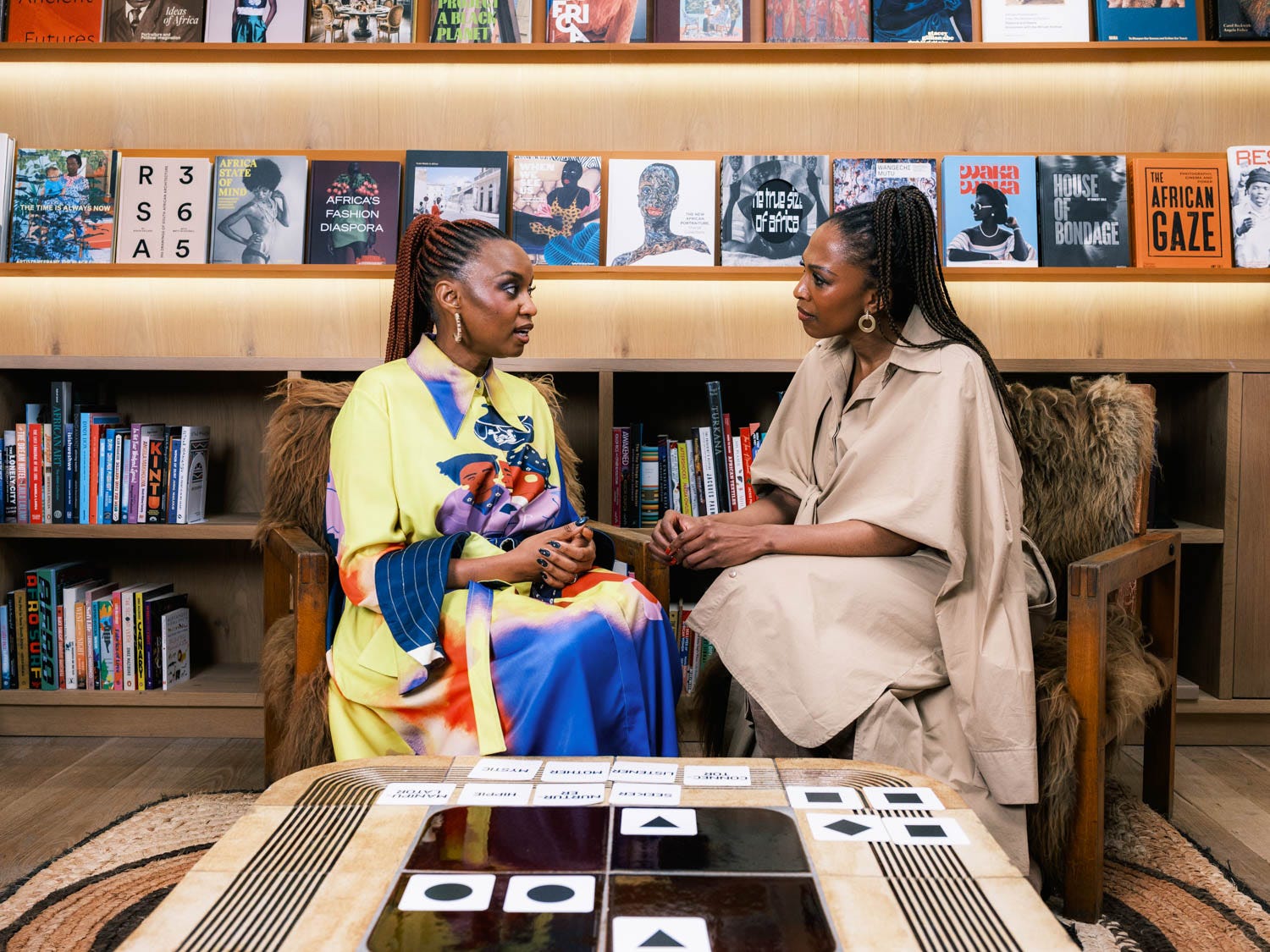
Listening to Kahiu speak to Khangi Khoza on The African Imaginary podcast all these years later, I realise how completely that impulse runs through her career. There are almost too many philosophies to steal from this abundant conversation – about joy, motherhood, care, success, persistence, nature, belonging – but perhaps the one I kept returning to is her warning about dream suppressants.
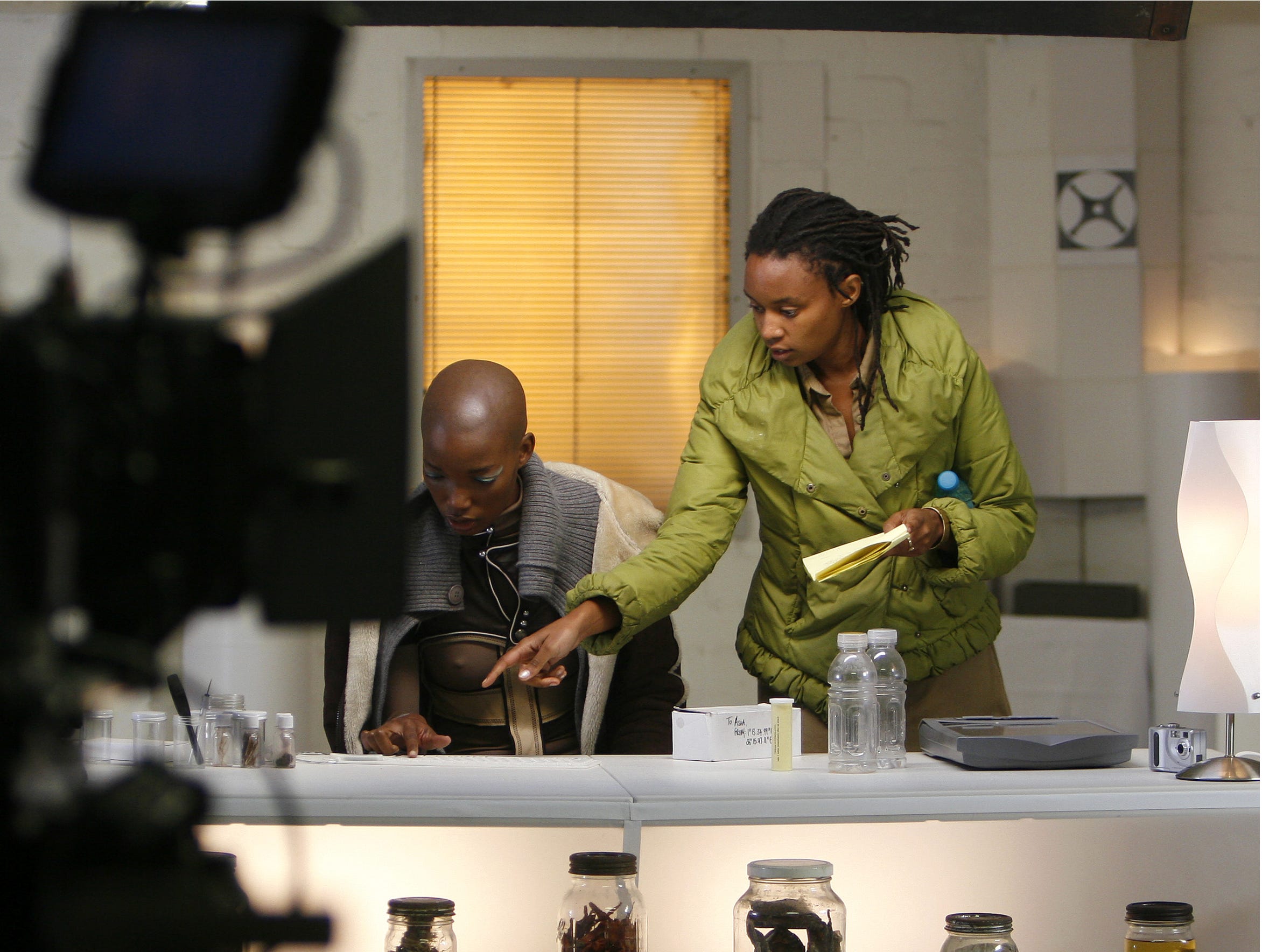
They first appear in Pumzi (2009), Kahiu’s extraordinary science-fiction short, set in a futuristic, dystopian Africa devastated by ecological catastrophe. The film’s protagonist, Asha, lives in a closed community where dreaming is forbidden, suppressed by medication. She receives a mysterious sample of apparently fertile soil, secretly plants a seed and risks everything to find somewhere it might grow.
In the podcast, Kahiu explains the logic behind those dream suppressants: if you can dream, you can imagine beyond the version of reality with which you have been presented. A lot of us are told to take them, she believes, so that we do not disturb a status quo serving the few rather than the many. It is difficult not to feel that warning acutely now, 17 years after the film was made, at a moment when those in power distort reality, misinformation proliferates and division depends, in part, on convincing us that the world can only be as we are told it is. The ability to imagine otherwise feels increasingly political – and a key to almost everything Kahiu has made since.
Kahiu calls some of her work ‘mythical fiction’ and identifies herself during the podcast’s opening game of Keep or Toss as a seeker, nurturer, mother, mystic, connector – and, historically at least, a hippie. She talks about her connection to nature and about wanting to be ‘the same religion as a tree’. As a child in Nairobi she would climb trees to read, in part because nobody thought to look for her there.
And I think trees are a particularly useful way to think about her. Pumzi begins with a seed and asks what it takes to believe in life you cannot yet see. One of her childhood icons was Kenyan environmentalist and Nobel laureate Wangarĩ Maathai, whose life she documented in For Our Land (2009), part of MNET’s Great Africans series. Maathai famously said, ‘When we plant trees, we plant seeds of peace and seeds of hope.’ Kahiu’s filmmaking seems to be doing something similar: planting images of possible worlds.
That does not mean she makes films uncomplicated by pain. For example, her poignant debut feature, From a Whisper (2008), explored the emotional aftermath of the 1998 US Embassy bombing in Nairobi through the lives of an artist and an intelligence officer.
On making Pumzi shortly afterwards, she remembers being asked why, with all the stories there were to tell about Africa, she had chosen science fiction. Why did African imagination require a justification at all? From that question came Afrobubblegum, her call for African art that could be ‘fun, fierce and frivolous’ and for Africans to be afforded the same imaginative freedom as anybody else.
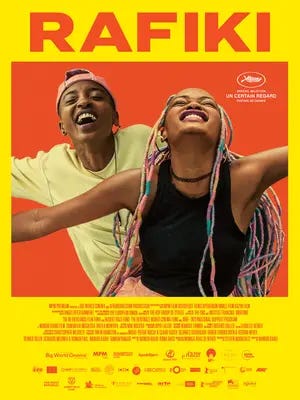
Out of that philosophy, now 12 years into her career, came Rafiki (2018), the point at which I was lucky enough to enter her orbit. Adapted from Ugandan writer Monica Arac de Nyeko’s story Jambula Tree, it is, before anything else, exactly what Kahiu wanted it to be: a love story. Characters Kena and Ziki fall for each other in a vibrant Nairobi, and the film lets music (its soundtrack a living bibliography of contemporary Kenyan and East African artists), colour and desire occupy the centre of the frame. It became the first Kenyan film to be selected at Cannes Film Festival in 2018 and, as I had the privilege of witnessing first hand, went on to touch audiences all over the world.
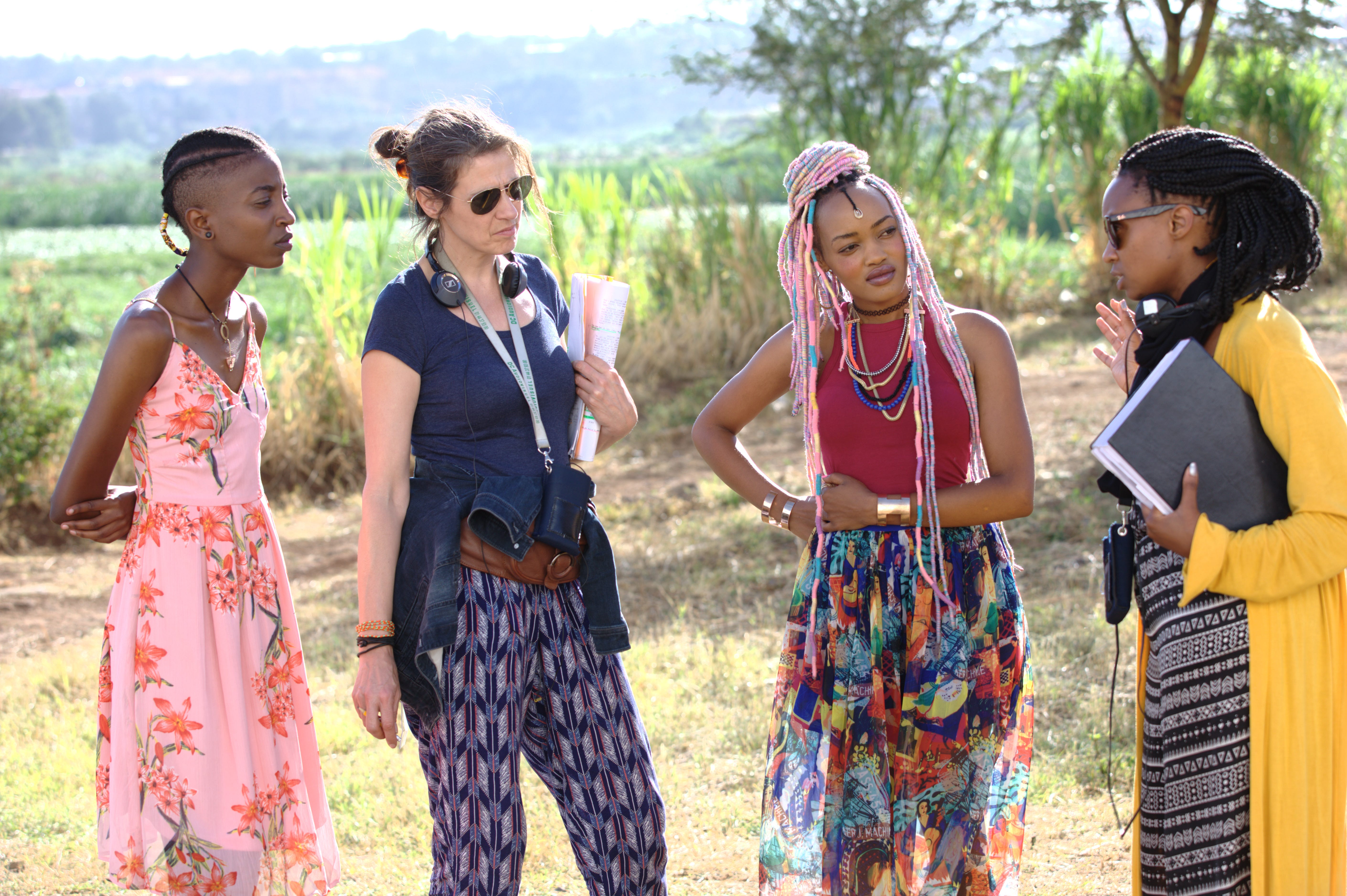
Despite its international success, Rafiki was banned at home, propelling Kahiu – reluctantly, she stresses – into activism. She and her team’s seven-year-long fight reached Kenya’s Court of Appeal in January this year, where a judgment invalidated parts of the country’s Film and Stage Plays Act governing the use of force and seizure of filmmakers’ material, as well as reopening a route to challenge Rafiki’s classification and censorship. A film made because Kahiu simply wanted to see Kenyans falling in love on screen has begun, quite literally, to alter the rules determining who gets to make and show films in the country.
Perhaps that is why ‘belonging’, rather than science fiction or romance or fantasy, is the genre Kahiu claims for herself. ‘Belonging is my style,’ she says, ‘more than any genre. Belonging is the question that I strive to ask in every piece of work.’ The question travels from Kena and Ziki to her recent epic Washington Black (2025), starring and produced by Academy Award nominee Sterling K. Brown. Based on the bestselling novel by Esi Edugyan, the wondrous eight-part historical fantasy series from Hulu follows an 11-year-old boy born on a sugar plantation who imagines an existence beyond the boundaries assigned to him.
On listening to the podcast, I can’t help but feel there could not be a more fitting guest to invite into The African Imaginary. Kahiu’s career has been one long argument against this imposed border around African imagination: against the idea that the continent’s stories must explain, educate, rescue or justify themselves before they are allowed simply to dream.
Towards the end of their conversation, Kahiu invokes the words of Ousmane Sembène. When asked decades ago about the relationship between his films and Europe, the pioneering Senegalese filmmaker (who is one of Kahiu’s icons) refused the inherent assumption that Europe should be his point of orientation: ‘Why be a sunflower and turn towards the sun? I myself am the sun.’ Kahiu is currently making her first moving-image artwork for an upcoming 2026-27 exhibition at Zeitz MOCAA alongside Zeresenay Berhane Mehari, Mati Diop, Jim Chuchu and The Otolith Group, titled, in homage, Turning Towards the Sun.
In the podcast, she expresses her hope that more of us might begin to understand ourselves in Sembène’s terms: not perpetually seeking the centre elsewhere but recognising that ‘we are the centre of our universes’. Maybe the work begins by refusing the dream suppressant. Then planting something. And seeing what grows.
Carmen Thompson is a freelance film programmer, curator and distributor based in Edinburgh. Her interests centre around cinema from the African continent and the Black diaspora. Carmen currently works as head of distribution for We Are Parable, programmer for Hot Docs Festival, and is co-founder of Scotland’s Jali Collective.